At the beginning of the 20th century, the Austrian musician Franz Schreker was one of the most successful and most frequently performed composers in the German-speaking world. As a representative of Viennese Modernism, he incorporated inspirations from the artistic movements of literary impressionism, naturalism and symbolism into his operas. His emotionally charged, mystical and sumptuous music is characterized by a fascination with the mysterious, insatiable longings, and sizzling eroticism. Two German opera houses — the Deutsche Oper Berlin and the Bühnen Halle an der Saale — have presented Schreker’s operas in a fascinating way, thereby undoubtedly contributing to a renaissance of this magnificent music.
Franz Schreker was born in Monaco in 1878. His father — a prominent Austrian court photographer — ran several studios across Europe. He came from a Jewish family but converted (in 1876) to Protestantism. The Schreker family then lived in Linz for a time (beginning in 1881) until his father’s death in 1888. With six children, Franz Schreker’s mother subsequently moved to Vienna.
Franz Schreker, circa 1912. Source: Wikipedia
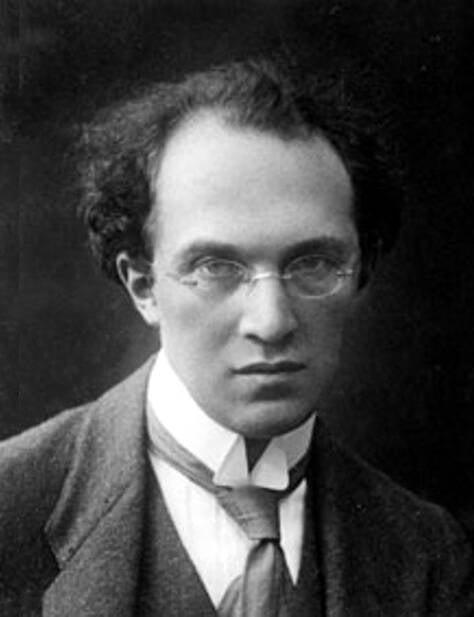
At the young age of 11, Franz Schreker began a comprehensive musical education in Vienna, studying organ, piano, music theory and harmony. He attended the conservatory beginning in 1892 and received his diploma in composition in 1900.
Until 1920, Schreker’s compositional work took place almost exclusively in Vienna. He composed numerous orchestral pieces and songs, and his first opera, „Flammen“, premiered in Vienna in 1902.
In Vienna, Franz Schreker consistently engaged in exchange and collaboration with the most prominent composers of his time, including Mahler and Zemlinsky, and later also Korngold and Pfitzner. Performances of each other’s works took place regularly in a spirit of mutual respect and inspiration; the early 20th century marked a golden age for opera in Vienna.
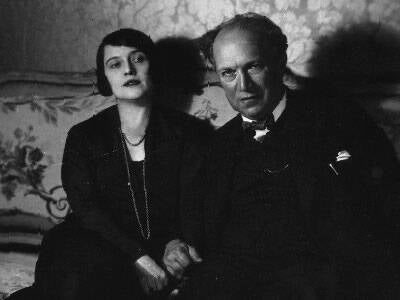
Franz and Maria Schreker (above). Source: Wikipedia
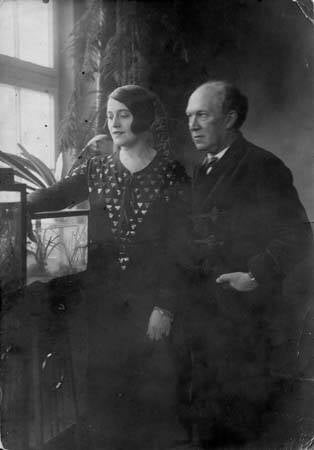
Franz and Maria Schreker, circa 1931 (right). Source: Franz Schreker Foundation
Franz Schreker married in 1909. His wife, Maria, was a well-known opera singer who later helped his opera „Der Schatzgräber“ achieve great success through her performance. Their children, Ottilie (known as Haidy) and Imanuel (known as Immo), were born in 1910 and 1914, respectively.
Franz Schreker achieved his greatest success — the one that made him world-famous — in 1912 with the premiere of his opera „Der ferne Klang“ in Frankfurt am Main. In Vienna the work was rejected primarily on grounds of immorality and was not performed there until the end of the imperial era. Consequently, all of his subsequent major successes — “Die Gezeichneten” in 1918 and “Der Schatzgräber” in 1920 — premiered in Frankfurt. “Das Spielwerk und die Prinzessin” however premiered simultaneously in Frankfurt and Vienna in 1913. Franz Schreker wrote the libretti for his successful operas himself.
Franz Schreker spent the next phase of his life in Berlin. There he was appointed director of the Berlin University of the Arts in 1920. Successful performances of his operas took place throughout Germany. Maria Schreker made her debut as Els in “Der Schatzgräber” in Münster in 1922.
Even after World War I Schreker’s operas continued to be shaped by the fin de siècle — with all its characteristics, such as an apocalyptic mood, hedonism and the exploration of the unconscious. Artistic figures — Fritz, Meister Florian, and Elis — are also the protagonists of his successful operas.
Franz Schreker faced increasing hostility from the Nazis. In 1932 he was forced to step down as director of the Berlin Academy of Music. He then took a position at the Prussian Academy, but was dismissed from there as well a year later. Franz Schreker died of a heart attack in 1933. His family was able to emigrate.
Condemned by the Nazis as “degenerate music” and later considered too conservative by some and too progressive and modern by others, Franz Schreker did not experience a renaissance after World War II.
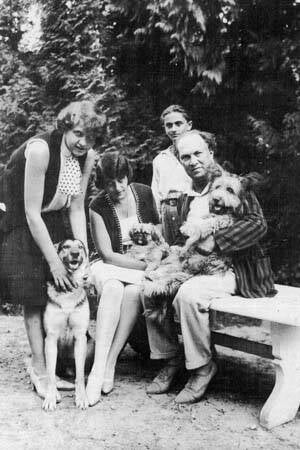
The Schreker family (circa 1930) – Maria, Ottilie (Haidy), Imanuel (Immo), and Franz. Source: Franz Schreker Foundation
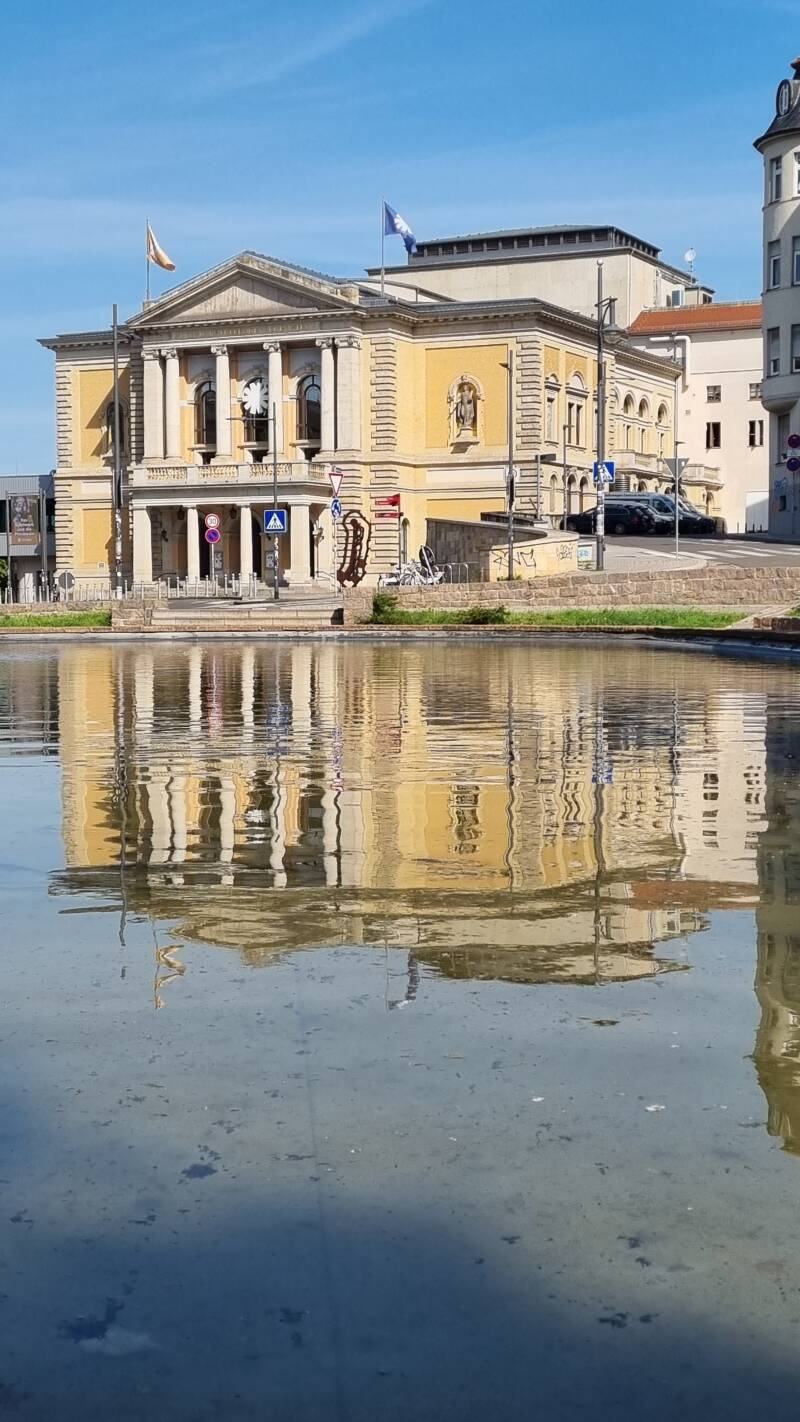
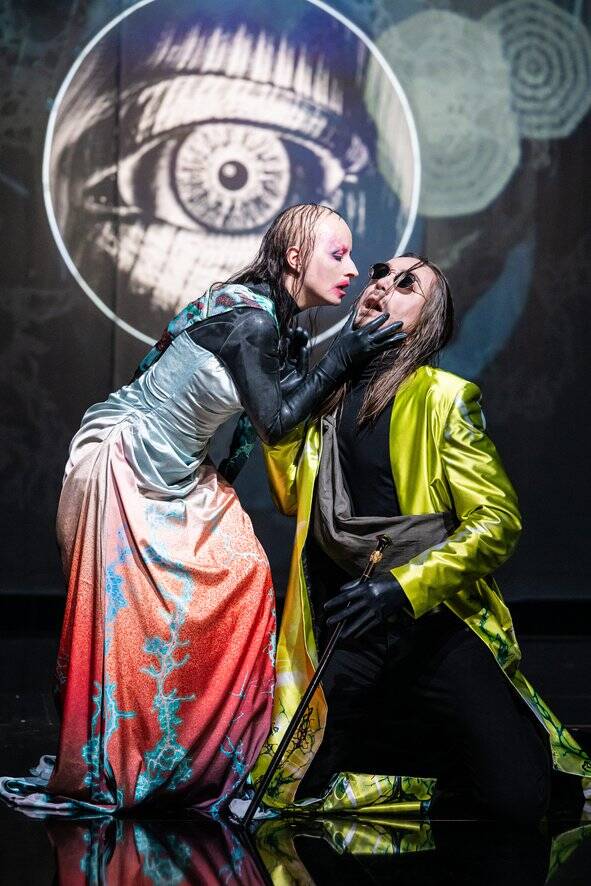
The Bühnen Halle an der Saale has taken on the extremely rarely performed masterpiece „Das Spielwerk und die Prinzessin“ in a thrilling production by Nele Lindemann. This opera doesn’t reveal itself immediately, neither musically nor in terms of its content. But that is precisely what makes it so fascinating. In both respects, the first time you experience it, you come away wanting to hear and learn more and with each subsequent viewing, you can’t get enough of it. You become just as captivated by the “Spielwerk” as the opera’s protagonists.
The opera house in Halle an der Saale (left)
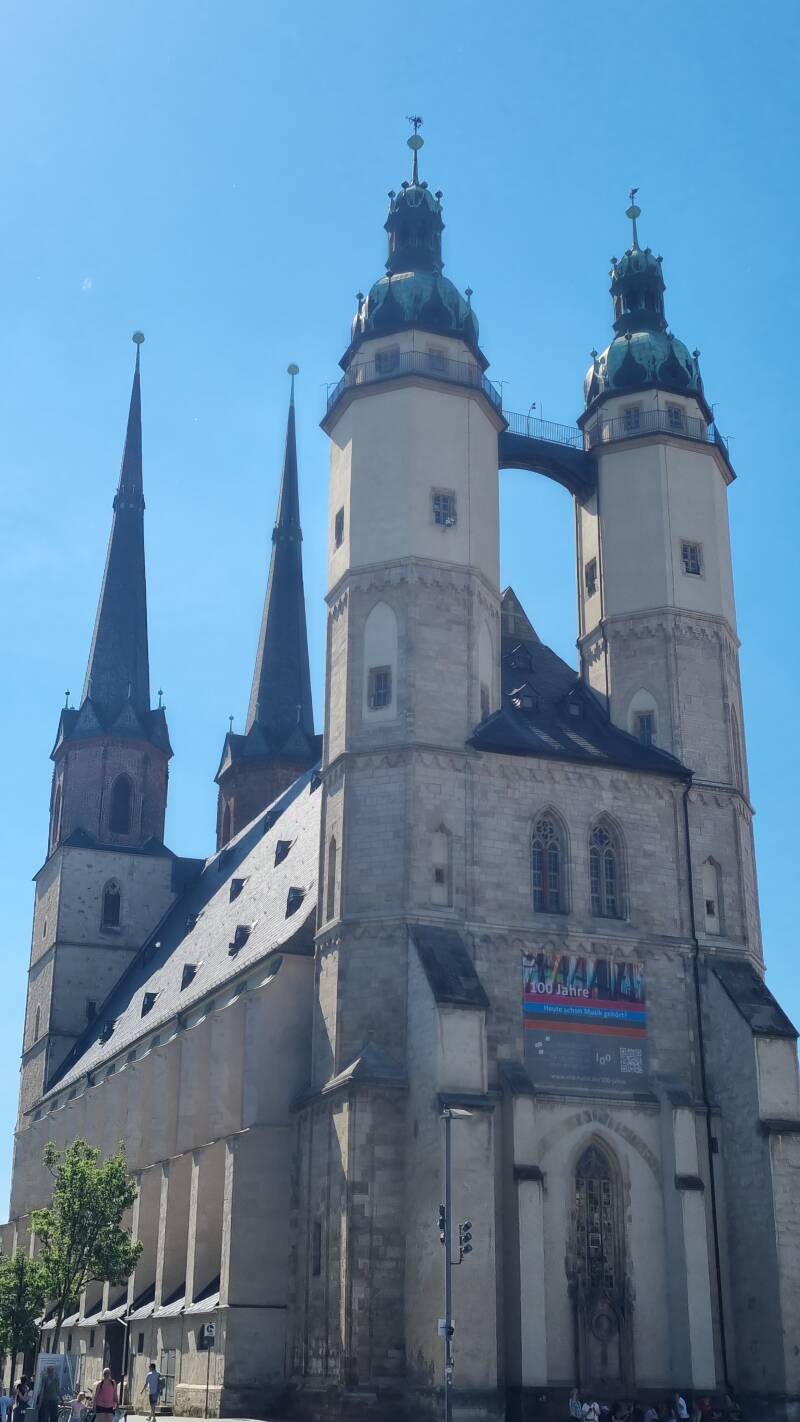
St. Mary’s Market Church (right)
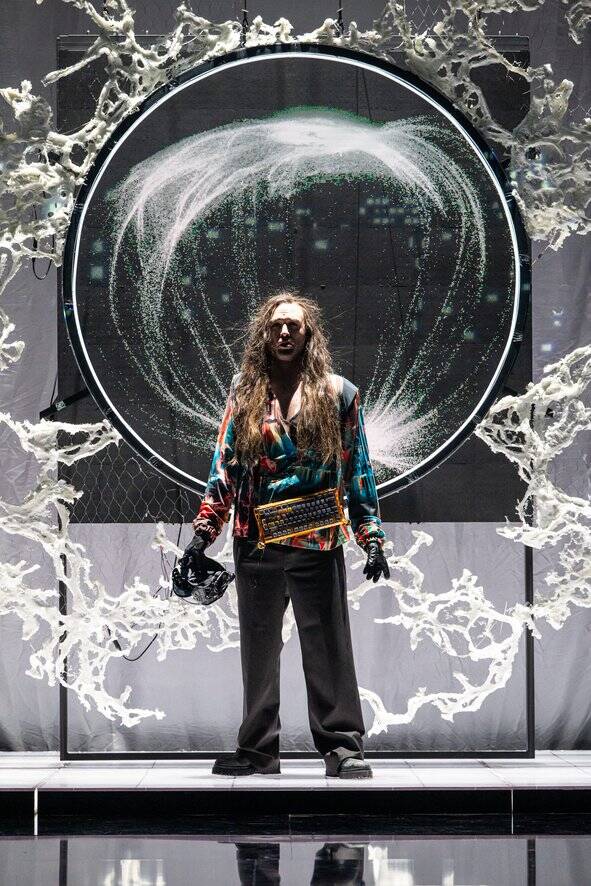
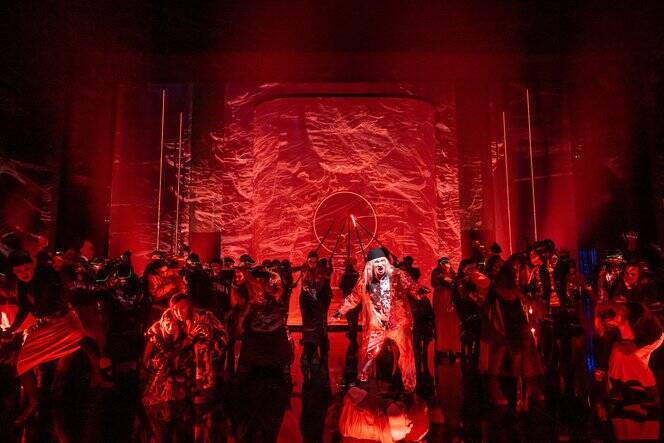
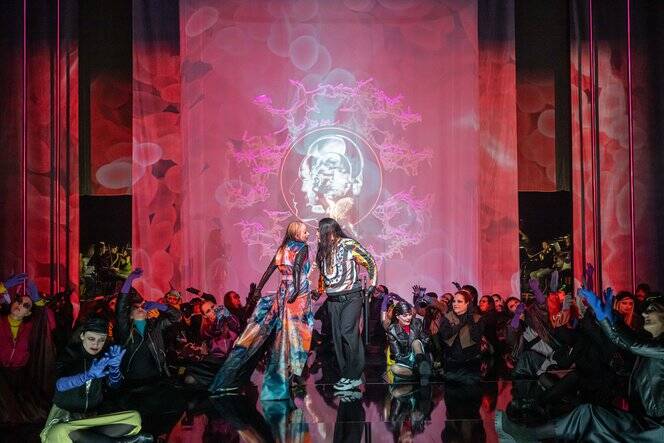
From the magnificent production by Bühnen Halle. Thomas Weinhappel (Master Florian, top left), Ki-Hyun Park (Wolf, top right), Franziska Krötenherdt and Chulhyun Kim (Princess and Boy, bottom left), Franziska Krötenheerdt and Michael Zehe (Princess and Castellan, bottom right) © Anna Kolata
Roberto Becker puts it very well in the magazine „Die deutsche Bühne“:
“Das Spielwerk und die Prinzessin” … ranks … among his most rarely performed works. Which is not surprising. But not because of the music, rather because of the libretto — which Schreker cobbled together himself — that is as overloaded with symbolism as it is confusingly structured. A cast of good and evil characters straight out of a fairy tale book. Full of mystery and adaptations. Featuring a princess who is terminally ill, like an aged Salome, and a cheerful wandering youth who wants to save her. Where supernatural forces are at work, the people are in an uproar, distrusting the eponymous “Spielwerk” and its creator. And where the ecstatic uninhibitedness into which the plot (or rather, the events and states of mind) escalates culminates in a catastrophe. This libretto is difficult to approach rationally and with the tried-and-true methods of musical theater.
For the [music] does not hide its beguiling beauty and evocative power in the slightest behind avant-garde actionism. It seeks to captivate with all the power that Wagner’s descendants and successors have to offer. And in this regard, Schreker has a great deal to offer. At times, one even thinks one can hear a few faint sounds drifting in from the realm of the Grail. What Schreker unleashes here is neither a provocative break with late Romanticism nor an imitation of it. It is, rather a self-assured step forward toward a unique orchestral language and its interplay with the protagonists’ parlando — a quality that ensures the work’s enduring appeal. At the same time it guarantees that today’s listeners, familiar with Wagner and Strauss, will enjoy its lingering resonance.
And once again I am grateful to the Deutsche Oper Berlin for unearthing a nearly forgotten operatic gem and presenting it to the audience in a fantastic modern (yet accessible — requiring no prior explanations in the foyer) production (by Christof Loy): “Der Schatzgräber.” A recording is available as a stream or on DVD. The theater magazine “Die deutsche Bühne” once again finds the right words (here by Regine Müller) to describe it:
The story is absurd. Disguised as a fairy tale, it deals with the greed for gold as a metaphor for the search for happiness, recognition and identity. It also explores the role of art as a magical means of all-encompassing fulfillment and happiness — and, not least, feverish male fantasies. Furthermore Schreker takes on his “super-father” Wagner with manic perseverance, not only in the lavishly exuberant score — which includes references to „Tristan“ — but also in the libretto he wrote himself, which is overflowing with allusions: A ban on asking questions recalls „Lohengrin“, the main characters “Els” and “Elis” allude to Elsa, the golden treasures that give and take away power allude to the „Ring“ and a female character even “chooses for herself.” But the “Ilsenstein” — where the witch dwells in Humperdinck’s „Hansel and Gretel“ — also makes an appearance, and Dvořák’s water nymph music from „Rusalka“ flashes like lightning through the score.
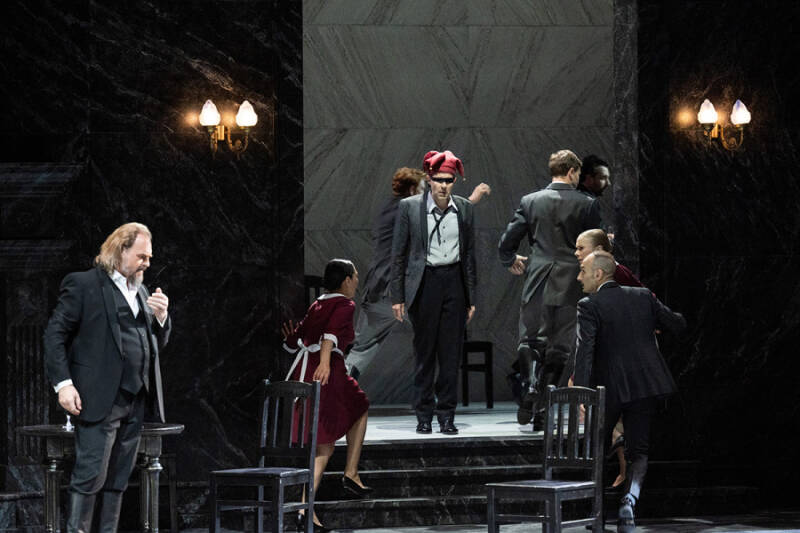
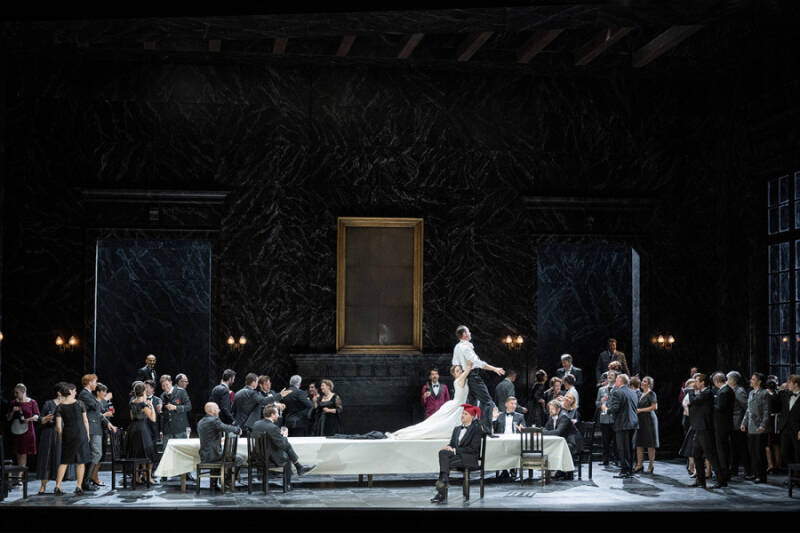
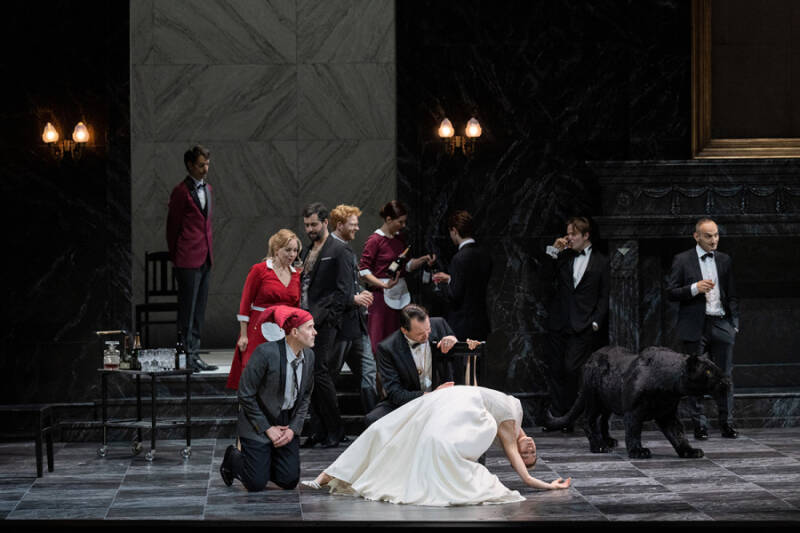
From the spectacular production by the Deutsche Oper Berlin, which is also available as a stream or on DVD. Link to the trailer (you may need to skip the ads): https://www.youtube.com/watch?v=qnSlbQtTNMY
Elisabeth Strid (Els), Daniel Johansson (Elis), Michael Laurenz (Narr), Thomas Johannes Mayer (Vogt) © Monika Rittershaus
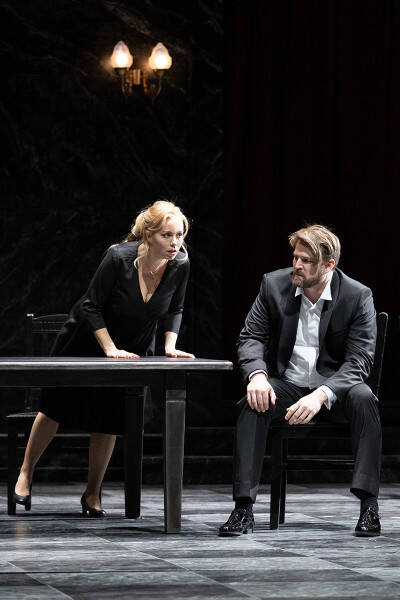
And it should also be noted that, despite all the associations with Richard Wagner, this opera is by no means a plagiarism, but rather a brilliant and original masterpiece by Franz Schreker.
I hope this post will spark curiosity and passion for Franz Schreker, so that readers will keep an eye on the performance schedules …. March 2027, „Der ferne Klang“ in Copenhagen? In case anyone happens to be in the area?
LINKS:
Maria Schreker as Elsa (Lohengrin) and Madama Butterfly: