Prague - a destination that captivates lovers of European cultural history, literature and classical music. Throughout the Czech Republic there is so much to discover, especially in the world of opera, that is largely unknown beyond the country’s borders. A trip to Prague is a wonderful opportunity to learn more about the great composer Antonín Dvořák, whose musical legacy - including all of his operas - was largely premiered here.

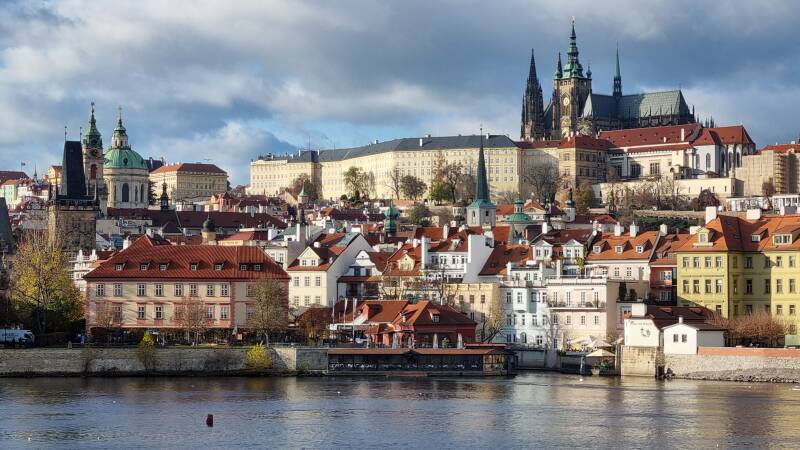
Prague Hradčany
Antonín Dvořák. From Wikimedia
Antonín Dvořák was born in 1841 in Nelahozeves (about 30 km north of Prague, on the Vltava River) into a family of butchers and innkeepers. His birthplace - now a lovingly maintained museum - is open to visitors. As a serious music enthusiast his father quickly recognized Antonín’s talent and at the age of 12 enrolled him as a student with the regionally renowned musician and music teacher Antonín Liehmann in Zlonice. Here Dvořák’s musical development was further nurtured and he composed his first small works. Dvořák later immortalized his teacher in the character of the music teacher Benda in the opera The Jacobin.

Birth place in Nelahozeves

In 1857 Dvořák enrolled at the Prague Organ School, a prestigious institution for musicians and composers. He played the viola in a small orchestra that was incorporated into the orchestra of the Prague Provisional Theater (Prozatimní divadlo) - the predecessor of the National Theater - in the 1860s. Dvořák himself worked in Prague as a music teacher, his life was marked by hard work and chronic financial hardship. Nevertheless Prague was for him the only right place to gain experience and develop his genius. As an orchestral musician he got to know the music of the most important opera composers (Mozart, Verdi, Smetana, …) up close.
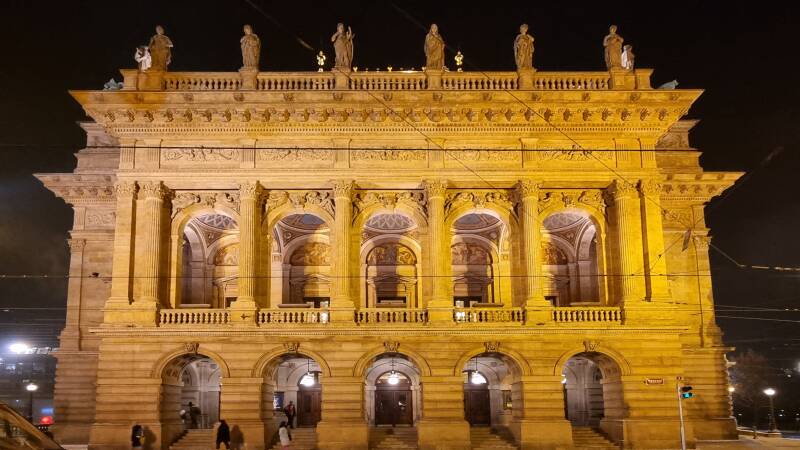
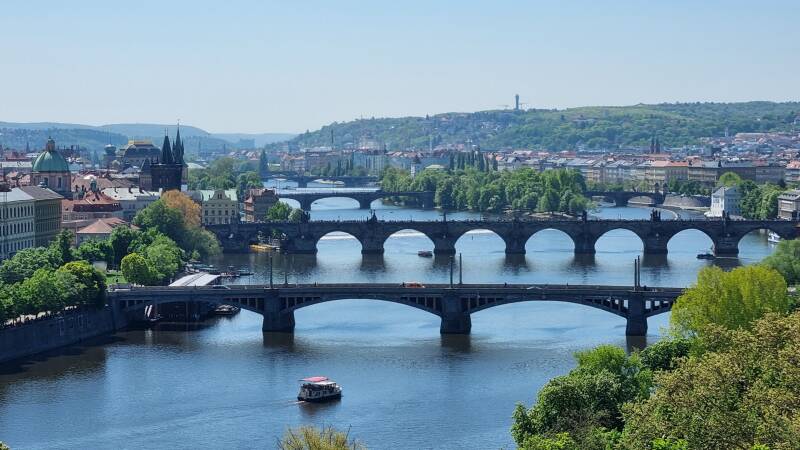

National Theater (left) and State Opera Prague (right) and view of Prague and the Vltava River (from Letna Park)
Around this time Dvořák fell in love with one of his piano students, Josefina Čermáková. This love remained unrequited - it inspired the song and string quartet cycle Cypresses - and Dvořák eventually married her sister Anna in 1873. Extraordinary circumstances from today’s perspective, yet it seems to have been a bond and a love for life that accompanied them through the brightest highs and the most abject lows, providing them with support.

Antonín Dvořák and his wife Anna in London in 1886. From Wikimedia
Antonín and Anna had a total of nine children, the first three of whom died in infancy. His Stabat Mater, Op. 58, emerged from this profound grief. Five years after their marriage, they had six children, all of whom reached adulthood. Among them the girl Otilie showed exceptional musical talent, small piano pieces by her have survived. She married the composer Josef Suk (then a student of Dvořák) in 1898, but she too died prematurely at the age of 27. Her sister Magdalena was a well-known concert singer.
Antonín Dvořák ventured into opera composition in the 1870s. He prepared Král a uhlíř for the Interim Theater, but numerous revisions were necessary. Finally he applied to the Ministry of Culture and Education in Vienna for a scholarship that was regularly awarded to exceptional composers. By this time in addition to chamber music works and songs his first symphonies were already in existence. Among the members of the jury in Vienna was Johannes Brahms. From that point on - with the close cooperation of publisher Fritz Simrock also playing a key role - Dvořák began his path toward financial independence.
This was followed by a period in which Dvořák turned his attention to a more intensely Czech-patriotic atmosphere - Slavonic Dances, Sounds from Moravia, Czech Suite - but also began traveling abroad in the 1880s. Several stays in London and the enthusiasm for oratorios that had existed there since the time of George Frideric Handel inspired his cantatas Svatební košile (The Ghost Bride) and Svatá Ludmila. Dvořák also spent a short time in Russia. His most lasting influence was likely his several-year stay in America. Dvořák accepted an invitation from the National Conservatory of Music in New York in 1891. He served as its director for two and a half years. His most beautiful souvenir for us is likely his Ninth Symphony, From the New World, Op. 95.

These outstanding achievements enabled Antonín Dvořák to purchase and renovate a spacious country estate in Vysoká u Příbramě, complete with a park featuring a lake named Rusalka. The small castle and the entire grounds are open to the public. The place remained a source of peace and inspiration for his future work until the end of his life.

Memorial in Vysoká u Příbramě. From Wikimedia (©Chmee2) and Vysoká u Příbramě, Rusalka Pond. From turistika.cz
At the Prague Conservatory, he taught and nurtured outstanding talents such as Oskar Nedbal, Vítězslav Novák, and Josef Suk. There is also a Dvořák Museum (a residential building) near the State Opera, but I believe it was hardly ever used. His compositions entered a phase of myths and fairy tales. These include, above all, the symphonic poems based on motifs from the world of Czech fairy tales - wonderful (late) Romantic program music - and his last three operas, Čert a Káča (Káťa and the Devil), Rusalka and Armida.

National Theater Prague / The Devil and Kate – Photo: Zdeněk Sokol

National Theater Prague / Armida – Photo: Zdeněk Sokol
Čert a Káča is a lighthearted fairy-tale opera that is sure to be performed every year during the pre-Christmas season. Countless composers have taken on the myth of Armida. Outside the Czech Republic it is little known that Dvořák did so as well. The rarely performed Armida with its rich melodies, oriental atmosphere and late-Romantic passions and sounds is a truly special experience.

National Theater Prague / Armida – Alžběta Poláčková (Armida) and Aleš Briscein (Rinald) – Photo: Zdeněk Sokol
In Prague - a paradise for opera enthusiasts - there are three opera houses with extensive repertoires. The most important works of Czech opera are always performed, and there are regular premieres and revivals of rarer works. Dvořák’s best-known masterpiece, Rusalka, is currently being performed at the State Opera (Státní Opera) in a traditional production AND at the National Theater (Národní Divadlo) in a more modern production.
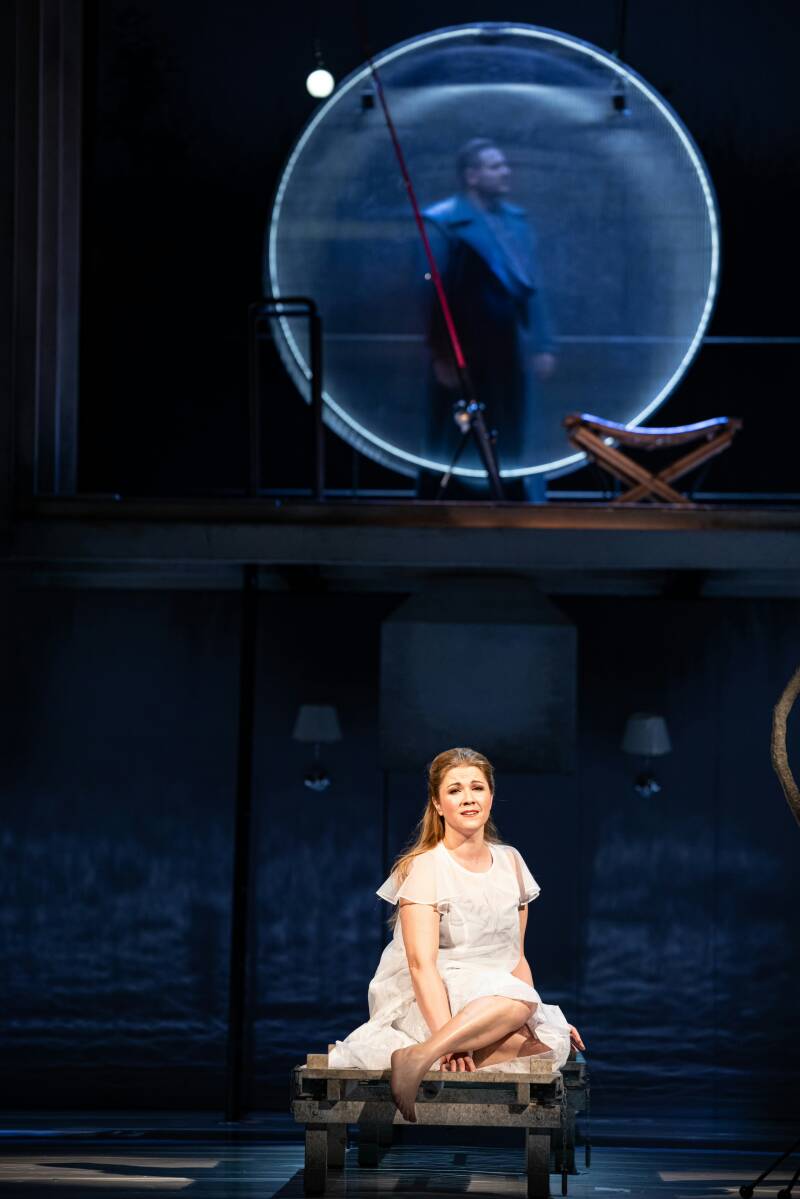
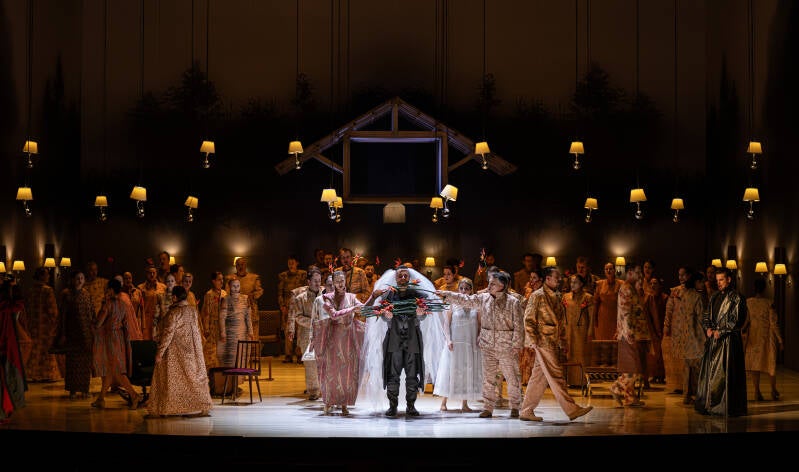
Národní Divadlo Praha / Rusalka – Kateřina Kněžíková and Act 2 (left and top). Photos: Pavel Hejny
State Opera Prague / Rusalka (right) – Photos: Zdeněk Sokol


The “Holy Trinity” of Prague’s opera houses (there is also the Estates Theater, the venue for the world premiere of Don Giovanni, but that’s a story for another time) boasts an outstanding ensemble of singers, consisting largely of Czech artists, but also including regular guests who are always a pleasure to hear and see. This is a family where you know the masterpieces are in the best hands and are interpreted with love and enthusiasm.
Antonín Dvořák died unexpectedly in 1904, likely as a result of kidney disease and an infection. His grave is located in the Vyšehrad Cemetery in Prague.
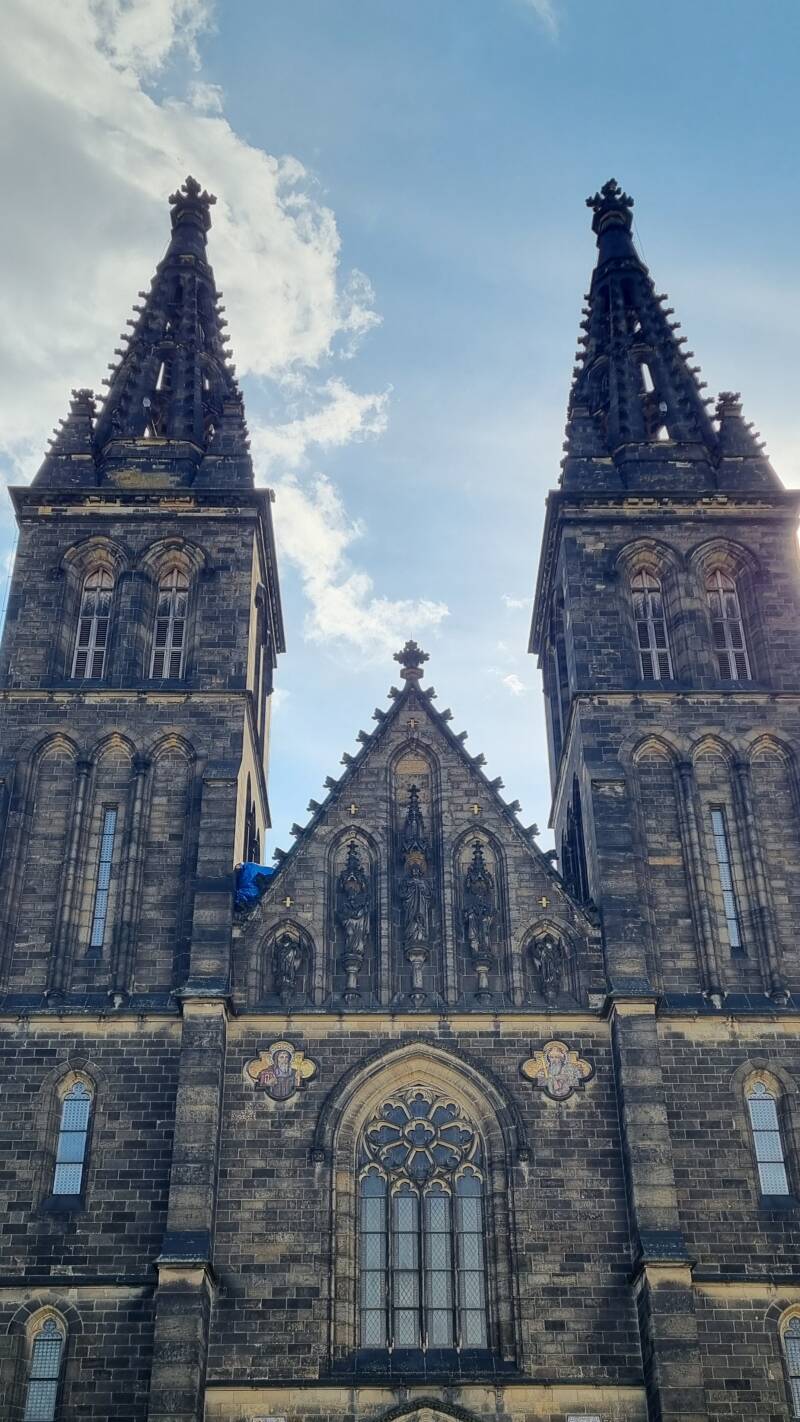
Basilica of St. Peter and Paul on the Vyšehrad Castle Hill.
Dvořák’s tomb at the Vyšehrad Cemetery. (Bust by Ladislav Šaloun)

LINKS:
Culinary delights:
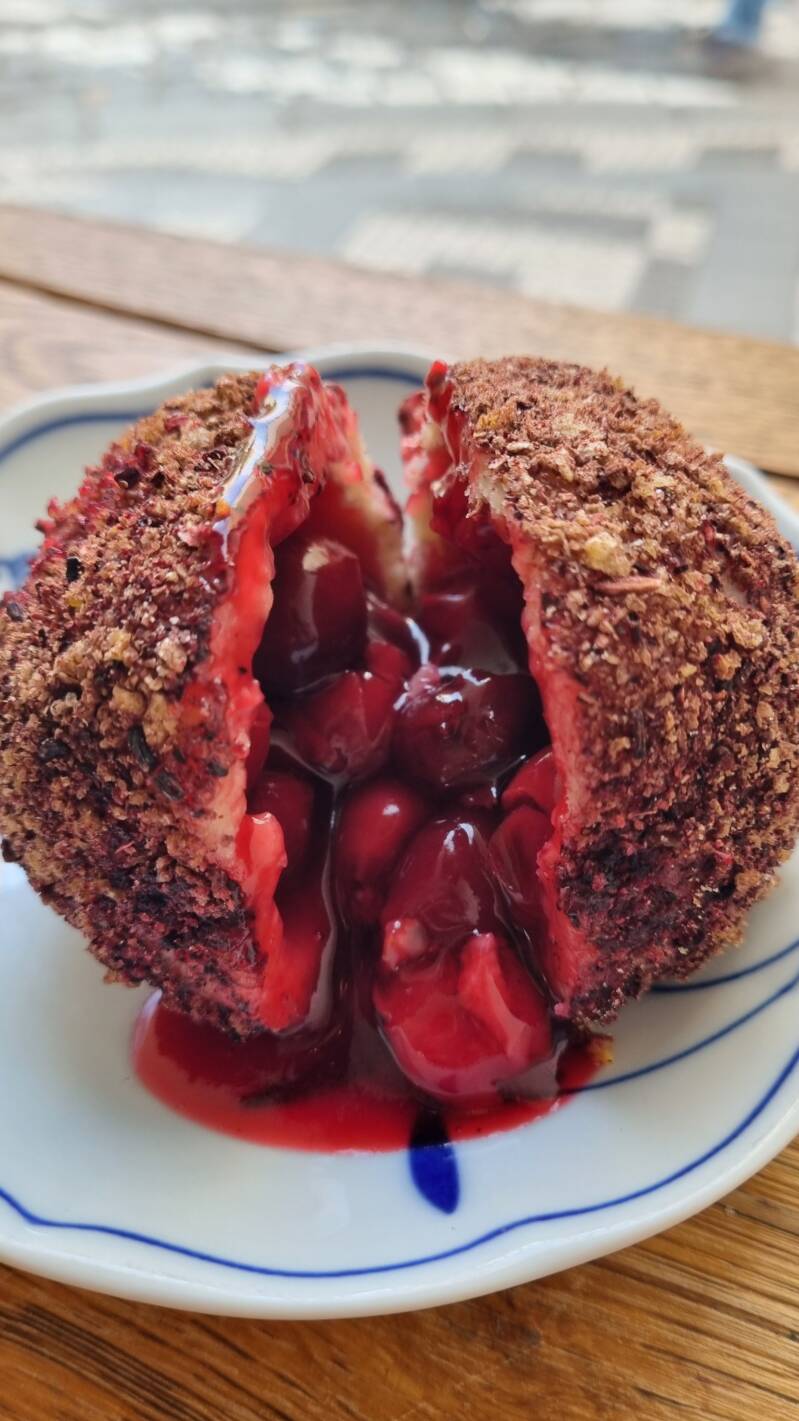
Don't miss out on Czech knedlíky! Sweet and savory varieties at Bistro knedlík:
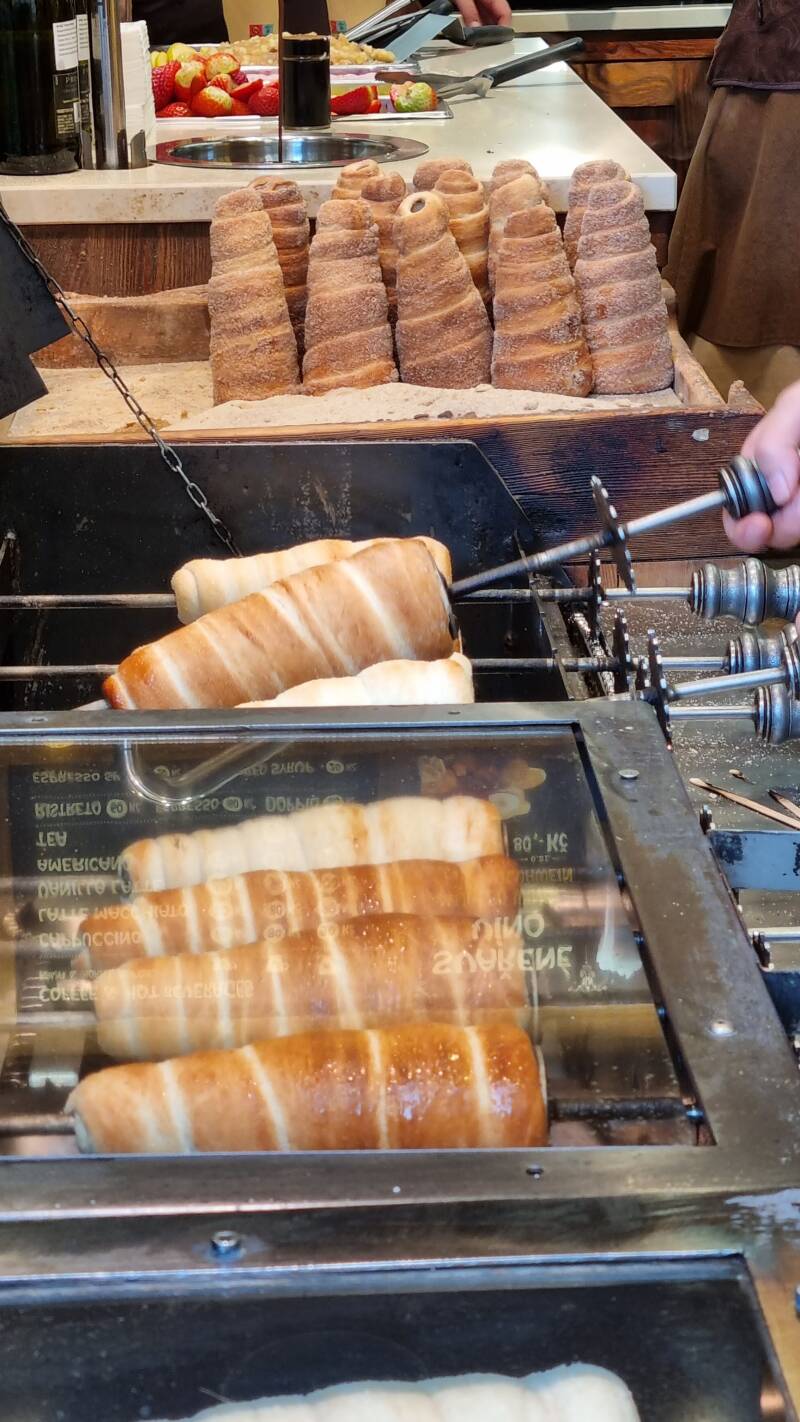
Don’t miss the Trdelnik (“Baumkuchen,” “Chimney cakes,” …) either! An endless selection, varying in quality… the closer you get to tourist hot spots, the fresher the Trdlo.
If you’re looking for an alternative to svíčková, řízek, and vepřové koleno, as well as some peace and quiet away from rowdy and screaming beer tourists, you’re in good hands at Maitrea in the heart of the Old Town:
https://www.restaurace-maitrea.cz/en/
Or at one of the Indian restaurants. I always enjoy returning to this one (The Two Brothers):
https://www.kthetwobrothers.eu/
And (preferably when the weather is nice), I’m drawn to the Hanavsky Pavilion to enjoy the magnificent view of Prague from Letná Park (one of Franz Kafka’s favorite walks, they say… but that’s another story):
https://hanavsky-pavilon.cz/?lang=en
Links to Antonín Dvořák:
Everything about Dvořák here:
https://www.antonin-dvorak.cz/en/life/biography/
Museums dedicated to Dvořák:
https://www.nm.cz/en/visit-us/buildings/antonin-dvorak-museum
Dvořák’s music:
https://www.supraphon.cz/en/prague-store
Here's everything about the three opera houses:
https://www.narodni-divadlo.cz/en/stages/the-state-opera
With trailers (you may need to skip the ads when opening the videos) for Rusalka:
https://www.youtube.com/watch?v=pjwglfLLyrg
And for Armida:
https://www.youtube.com/watch?v=yQT8-x7ssic