There is no doubt that Ruggiero Leoncavallo has managed to achieve worldwide fame that endures to this day, alongside Pietro Mascagni as founders and leading figures of Verismo. However, he was never able to surpass the triumph of his „Pagliacci“. Yet there is still much to discover. For example, the Teatro Regio Torino will soon be staging his „La Bohème“ as part of a Verismo-focused series.
Ruggiero Leoncavallo, Source: wikimedia
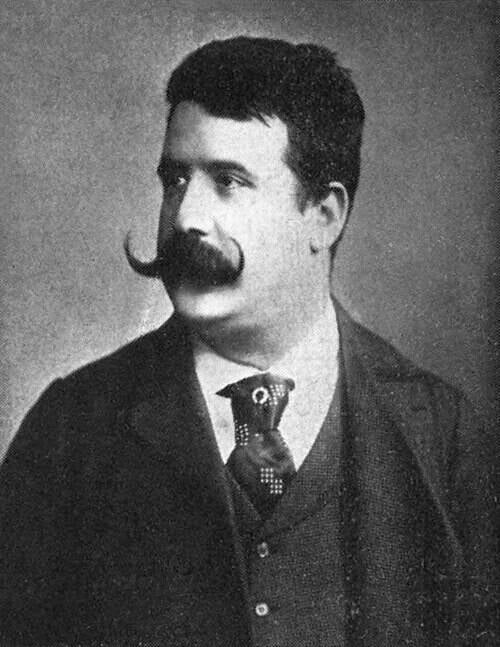
Ruggiero Leoncavallo (1857–1919) was already active as a composer when, in 1890, he was inspired by Pietro Mascagni’s „Cavalleria rusticana“ and wrote his own verismo opera, „Pagliacci“ (premiered in Milan in 1892) - the opera that today is almost inseparably linked to Mascagni’s masterpiece. Two exemplary one-act operas thus defined an era spanning decades (Verismo), the success of which neither Mascagni nor Leoncavallo could surpass with further great operas. What an incomprehensible dynamic!

Poster of the world premiere. Source interlude.hk
Yet Leoncavallo’s work after the success of “Pagliacci” was highly inspired. This was followed (in Milan in 1893) by “I Medici” - a gripping opera intended as part of a Renaissance Trilogy, “Crepusculum.” This was entirely in the tradition of Richard Wagner - the great German master with whom Leoncavallo shared the trait of writing his own libretti. And finally, “La Bohème” premiered (in Venice in 1897), about a year after Puccini’s.
Ruggiero Leoncavallo’s opera is also based on the same literary source, Henri Murger’s “Vie de Bohème.” However, I don’t think much of comparing the two masterpieces competitively. After all, no one would think to do that with “Manon Lescaut” either. Both composers created a masterpiece. It is solely due to the dynamics of the opera world - then as now - that one fell by the wayside.
Below is a synopsis to serve as a guide through Leoncavallo’s “La Bohème.” The music clips from YouTube will likely be interrupted by ads, so you may need to be patient.
Act 1
Café Momus. Christmas. The Bohemians (young artists) meet here regularly. The owner, Gaudenzio, complains to the musician Schaunard that his friends - among them the poet Rodolfo and the painter Marcello - are constantly frequenting Café Momus, thereby keeping wealthier customers away. Schaunard promises to organize events in the future that will attract many guests and bring Gaudenzio a lot of money.
Compared to Puccini’s version, Schaunard plays a much larger role in Leoncavallo’s opera, and we also meet his lover, Eufemia.
Leoncavallo’s version begins at Café Momus. The atmosphere of the first act is marked by a sense of cheerfulness. As the opera progresses, it becomes increasingly serious and sad. Overall, Leoncavallo’s opera seems somewhat more naturalistic. The denial of reality and the stubborn idealism of youth in the face of the harshness and hardship caused by poverty, illness, and cold are portrayed more strongly.
Marcello, Rodolfo, and Eufemia appear, urging the innkeeper to hurry. Also present is the philosopher Colline, who has found and purchased a Chinese dictionary and the „Iliad“ in Greek. Finally, Mimi - Rodolfo’s girlfriend - and Musette arrive. She is introduced by Mimi.
(https://www.youtube.com/watch?v=v56UxCXHxik – Ermonela Jaho / aus der CD Anima Rara)
Musette is warmly welcomed into the Bohemian circle. Her friends enthusiastically order a lavish dinner and expensive wines.
In Leoncavallo’s opera, the vocal parts are distributed differently. Rodolfo is written for baritone, Marcello for tenor, and Musette for mezzo-soprano.
Musette sings a song about her friend Mimi.
(https://www.youtube.com/watch?v=qfIy8Yx3XL4&t=4s - Ermonela Jaho / aus der CD Anima Rara)
Everyone eats, drinks, and celebrates carefree, and when they’re done, once again no one can pay the bill. Gaudenzio demands immediate payment.
Barbemuche, who had already entered the café earlier, introduces himself as a philosophical man of letters; he wants to befriend the artists and pay for dinner. But the friends are reluctant - an unspoken code of honor among the bohemians seems incompatible with this. They agree to play for the bill at the billiard table.
A character like Barbemuche does not appear in Puccini’s opera. In the literary source, La Vie de Bohème, Henri Murger is said to have used this character to caricature artistic rivals.
The billiards game takes place in the background in an adjoining room and is commented on by Gaudenzio. In the foreground, we witness a beautiful love duet between Marcello and Musette. Schaunard wins at billiards, and Barbemuche - a tactical loser (?) - is now “allowed” to pay the bill. The Christmas celebration continues.
Act 2
The courtyard in front of Musetta’s house. In the second act, the atmosphere grows somewhat darker. The lovers’ bond deepens, yet at the same time, poverty drives them further and further apart.
The doorman, Durand, tells the crowd that Musetta was abandoned by her lover - on whom she was financially dependent - because of her affair with Marcello. Her furniture was seized and carried into the courtyard of her former apartment building.
Marcello offers Musetta his humble apartment as a place to stay, which she gratefully accepts.
(https://www.youtube.com/watch?v=e1E-dxq-lF8&t=29s – Roberto Alagna / aus der CD Nessun dorma)
Musette recalls that she has invited guests for today. Thus, serious concerns are once again concealed amid the festivities.
Schaunard arrives, followed shortly afterward by Rodolfo, and the friends come up with the idea of holding the gathering right here in the courtyard. In exchange for a small financial token of appreciation, Durand agrees to illuminate the courtyard festively.
Among the guests are Mimi, Eufemia, and Barbemuche, accompanied by Count Paolo. The gathering of guests culminates in the “Hymn of the Bohemians.”
Among the other performances, Leoncavallo’s version also includes a musette waltz.
Meanwhile, Count Paolo courts Mimi. As the party continues, the building’s residents complain about the noise. The second act descends further and further into chaos, while Mimi disappears unseen with the count. Rodolfo searches for her in vain.
Act 3
Marcello’s attic room. Schaunard tells Marcello that he has broken up with Eufemia. Rodolfo is suffering the same heartache because Mimi has left him.
Marcello turns to Musette, and they mourn their withering rose by the window - a symbol of their love. Schaunard and Marcello leave the scene, and Musette considers leaving Marcello.
The reasons why the women give themselves to their wealthy lovers - hunger, suffering, the cold… - seem more dramatic and understandable in Leoncavallo’s version.
Musette writes a letter and asks a doorman to give it to Marcello. As she is about to leave, she runs into Mimi, who is looking for Rodolfo to ask for his forgiveness. Musette tries to dissuade her, but Mimi explains that she is willing to endure misery and hardship because she loves him. When they hear that Marcello is returning, Mimi hides.
Marcello appears, furious, and berates Musette. She confesses that she still loves him but can no longer bear the situation, yet he does not believe her and insults her. Musette then resolutely heads for the exit.
While Marcello tries to stop her, the hidden Mimi is discovered. Marcello is astonished to see her there and calls out to Rodolfo. “Viva la Bohème” he shouts at him with furious cynicism. Mimi has found Musette a new protector. Mimi begs him not to believe him. Rodolfo, however, humiliates the “Countess.”
Musette suggests that Mimi go with her. Marcello urges her to take all her belongings with her. While Mimi waits, weeping, Musette packs her things and takes the withered rose with her. Then she says goodbye to Marcello. In a poignant aria, Marcello mourns his lost love.
(https://www.youtube.com/watch?v=M8okJYiiIo8 – Franco Bonisolli / aus der Gesamtaufnahme unter Leitung von Heinz Wallberg)
Act 4
Rodolfo's attic room. From a dramatic perspective, Rodolfo and Mimi's love story does not unfold over the course of the entire opera (as it does in Puccini's work). Marcello and Musette appear to be the main couple. It is not until the fourth act that Mimi and Rodolfo take center stage.
Rodolfo sits at his desk and laments his fate.
(https://www.youtube.com/watch?v=31cgVebdfXA – Vittorio Vitelli, Wien 2002)
Marcello and Schaunard arrive with some food and reminisce about last year’s Christmas Eve and their ill-fated loves.
Just then, Mimi enters, shy and trembling. She asks if she can stay the night, since she has nowhere else to go. Schaunard invites her in. Mimi explains that the Count has left her. She had fallen ill, spent a long time in the hospital, but was discharged when she could no longer pay. She has a coughing fit, and Schaunard leads her to the table.
Overwhelmed, Rodolfo rushes over and takes her in his arms. She begs him for forgiveness, saying she has changed. When Rodolfo feels how ice-cold she is, Marcello breaks a chair and builds a fire.
Finally, Musette arrives as well, singing the song about Mimi from the first act on the stairs. She is elegantly dressed. However, when she sees Mimi’s misery, she takes off her jewelry and sends Schaunard to fetch a doctor with it.
Mimi senses her end is near. While Rodolfo holds her in his arms, she dreams once more of the happy times she shared with him and dies. “Natale, Natale.”
It is also interesting to note that Ruggiero Leoncavallo created a revised version in 1913 (in Palermo) – „Mimi Pinson“ (literarily influenced by Alfred de Musset’s „Portrait of a Grisette“, 1845). In this revised version, Rodolfo and Marcello are once again portrayed as a tenor and a baritone, as in Puccini’s opera.
Here I’d also like to share a historical recording of the Musette’s aria. Rosina Storchio was a very famous singer who sang the role of Mimi in the world premiere. However, her 1911 interpretation as Musette has been preserved:
https://youtu.be/7HYCT4D2ELA?si=nkh80QhFsHyxYh_o
Finally, I’d like to draw your attention to this beautiful complete recording, a classic of recording history featuring Heinz Wallberg, Lucia Popp, Bernd Weikl, Alexandrina Milcheva, and Franco Bonisolli:
https://youtu.be/ka1CgvGLXBc?si=HvMdZxj_7SLbUzjV
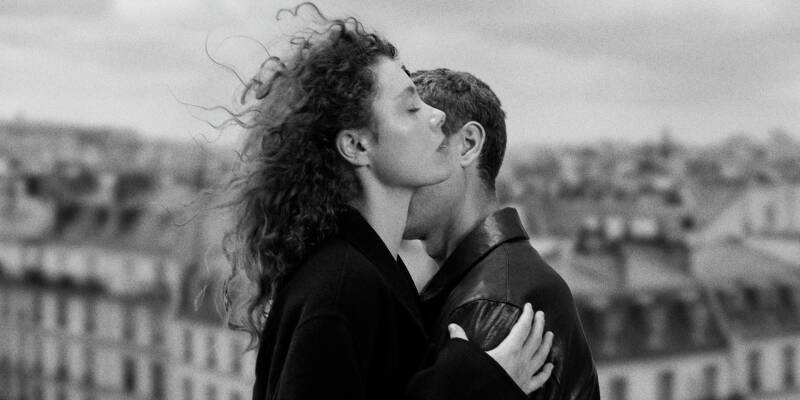
Left: Sujet / Teatro Regio Torino
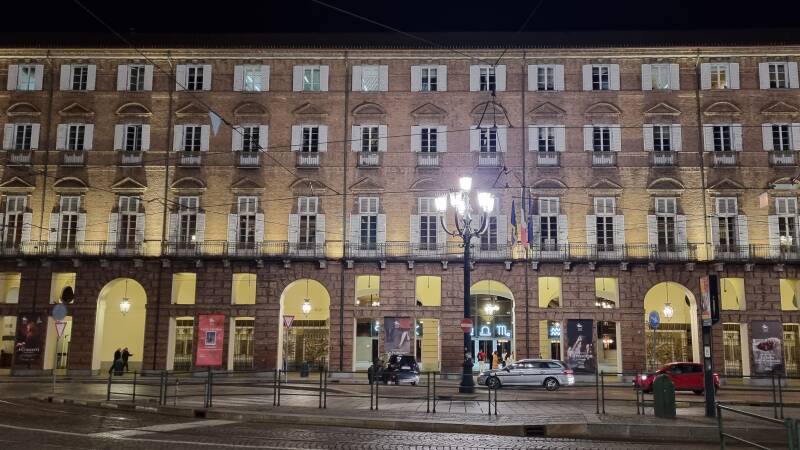
I would like to express my heartfelt thanks to the wonderful Teatro Regio di Torino for including Leoncavallo’s “La Bohème” in its Verismo-themed season in the fall of 2026. I highly recommend visiting Turin, just as I do. Turin is also an extremely lively, authentic Italian city with plenty to discover, from the Shroud of Turin to the specialty coffee “Bicerin”:
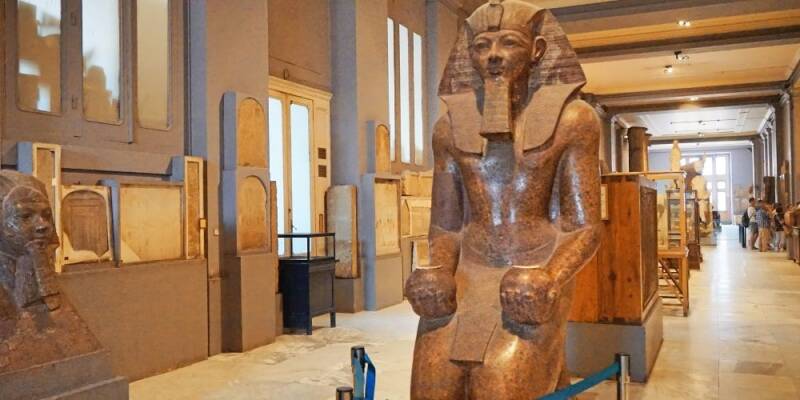
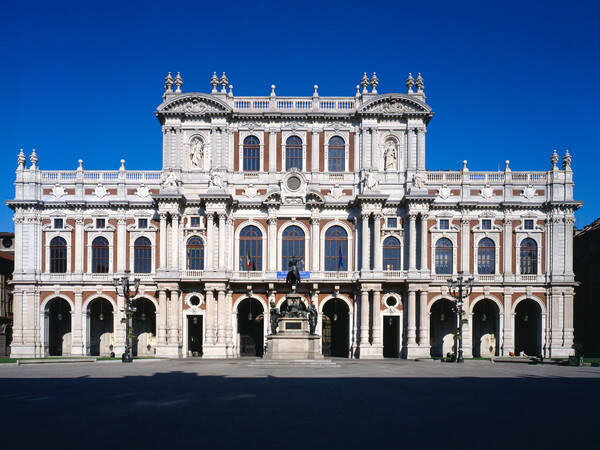
Museo Egizio Torino
Source: visititaly.eu
Museo Nazionale Risorgimento Italiano
https://www.museorisorgimentotorino.it/
Source: arte.it
Museo della Sindone
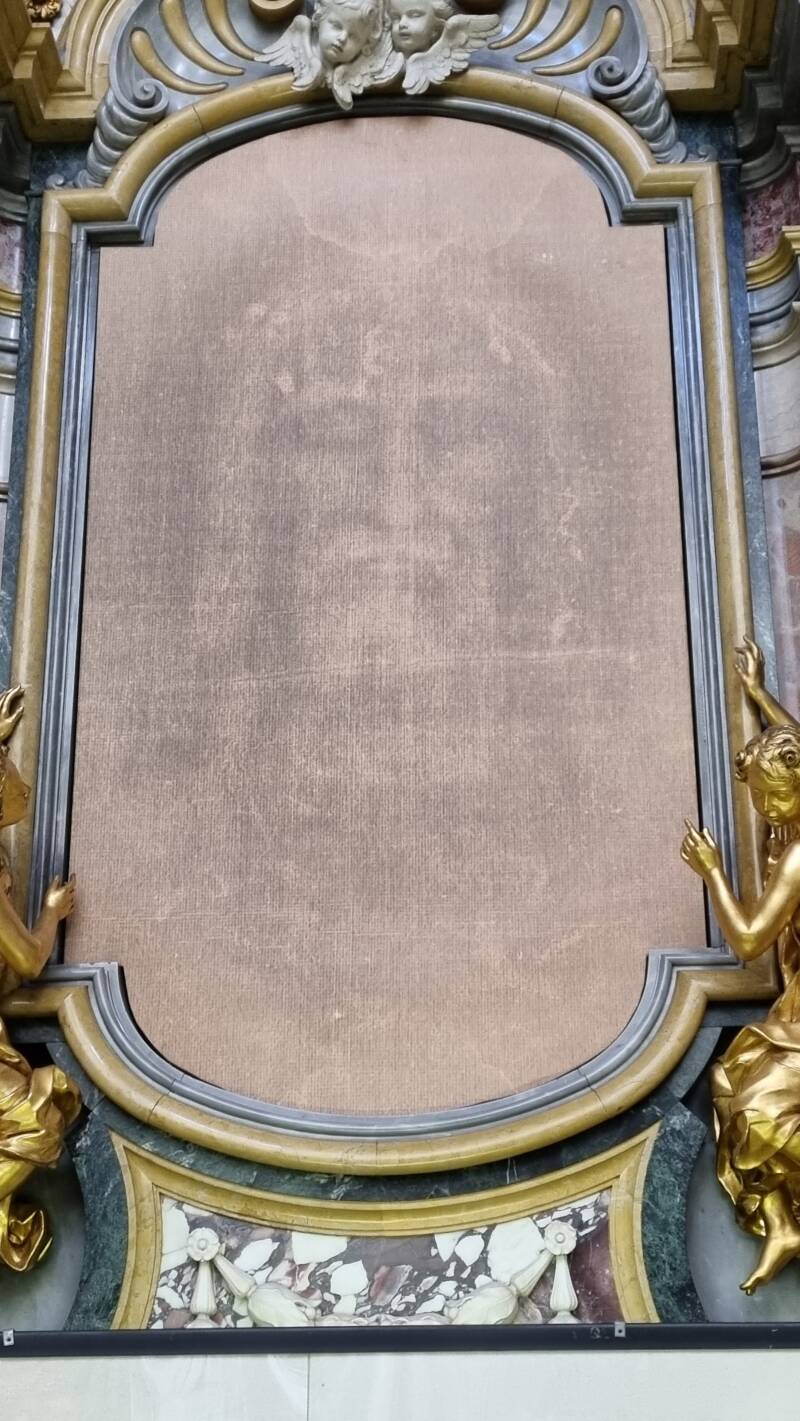
The Shroud is kept in the Duomo di Torino; there are numerous replicas throughout the city, including some very beautiful ones in the Parrocchia della Santissima Annunziata (Via Po)

And finally, don't miss out on the specialty coffee drink “Bicerin” (a blend of coffee, dark chocolate, and cream)! You can find it in almost every café in the city.
Have a wonderful time in Turin!