Opera is a living art form. The fact that it is often said these days to have merely a “museum-like” character is due to certain opera houses that have devoted themselves to a kind of celebrity culture - a strategy that, however, earns them the most media attention. This creates the illusion of a “museum.” The majority of opera houses and institutions are also committed to celebrating the richness of opera as an art form beyond the masterpieces that promise high attendance. And for composers who have not strayed into the dead end of atonality - who can still convey their art, emotions, and catharsis through harmonies and melodies … and there are still many of them today! One of them is Imants Kalniņš.
Imants Kalniņš - born in Riga in 1941 - wrote operas and symphonies, among other works, but also rock songs that were performed primarily in the 1960s by popular Latvian bands. In keeping with the spirit of the times, these songs naturally reflected a socially critical and hippie-inspired worldview and were at least banned by the Soviet authorities.
Imants Kalniņš, from Wikipedia
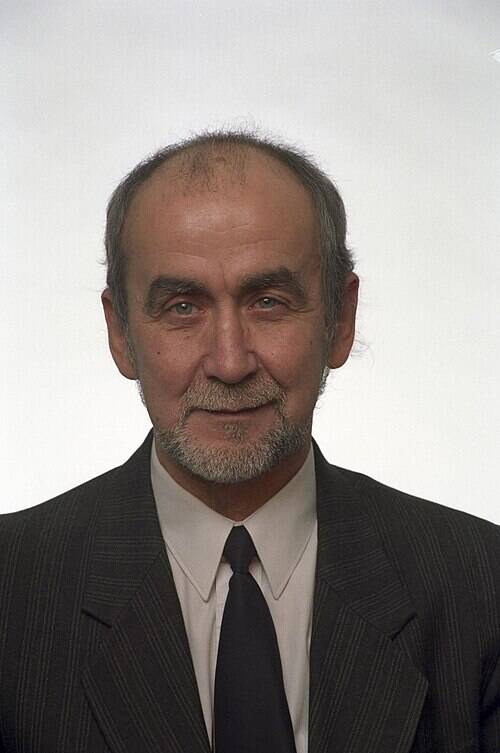
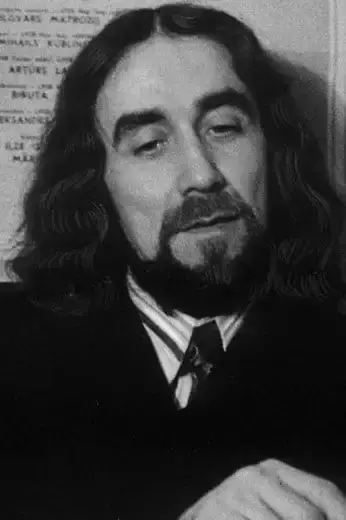
Imants Kalniņš, 1970s. Source: IMDB (Internet Movie Database) – nm0436143
The YouTube channel dedicated to Imants Kalniņš and the link to the LMIC (Latvian Music Information Center) are treasure troves of these songs and, of course, his classical music as well.
Imants Kalnins' YouTube channel:
https://www.youtube.com/channel/UCvhu8hn90fDMaNcHf2-JKCQ
Link to the Latvian Music Information Center:
Imants Kalniņš was politically active throughout his life, first in the Latvijas Tautas fronte (Latvian Popular Front) before independence and later, in the 1990s, in the Saeima, the Latvian parliament.
His opera “Spēlēju, dancoju” (I Played, I Danced) is the brilliant culmination of his artistic work and his struggle for freedom and identity. Veiled in a Latvian legend about Tots, the singer who plays the kokle, and Lelde, the bride abducted to the underworld, the Latvian people’s longing for freedom and rebirth is expressed in a stirring way.
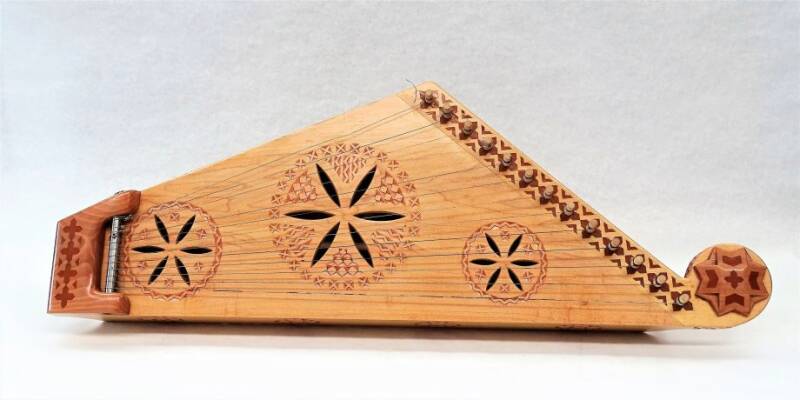
Kokle – traditional Latvian plucked string instrument. Photo from Música Para Ver / Instrumentos del Mundo
The opera is based on the play of the same name by the Latvian national poet Rainis (Jānis Pliekšāns / 1865–1929), whose literary struggle for freedom was directed against Tsarist Russia. Rainis spent much of his life in banishment and exile.
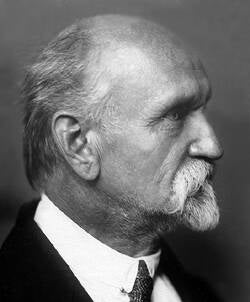
Jānis Pliekšāns / Pseudonym Rainis, Source: Wikipedia
Kalniņš considered this drama ideal for bringing his messages to the stage in a veiled, symbolist form. For Latvian audiences, the content was understandable through characters and symbols drawn from Latvian mythology and folklore. We need this background knowledge to understand his opera.
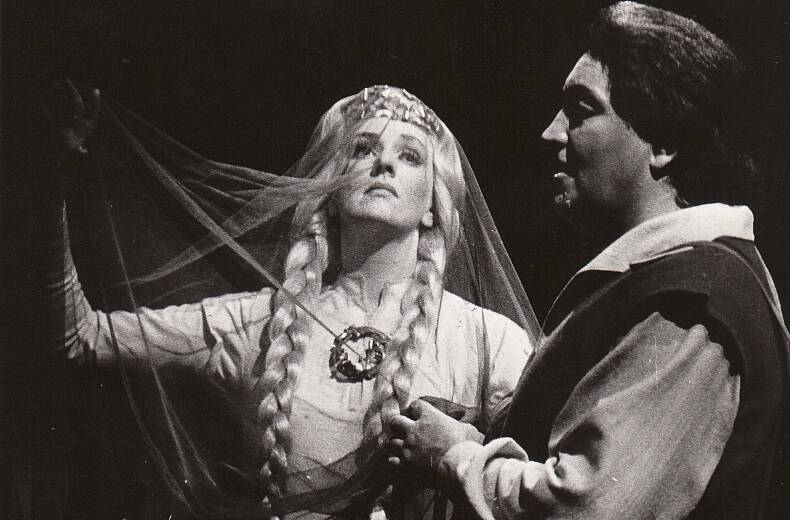
Lilija Greidāne and Kārlis Zariņš in the opera “Spēlēju, dancoju,” Photo: LNO
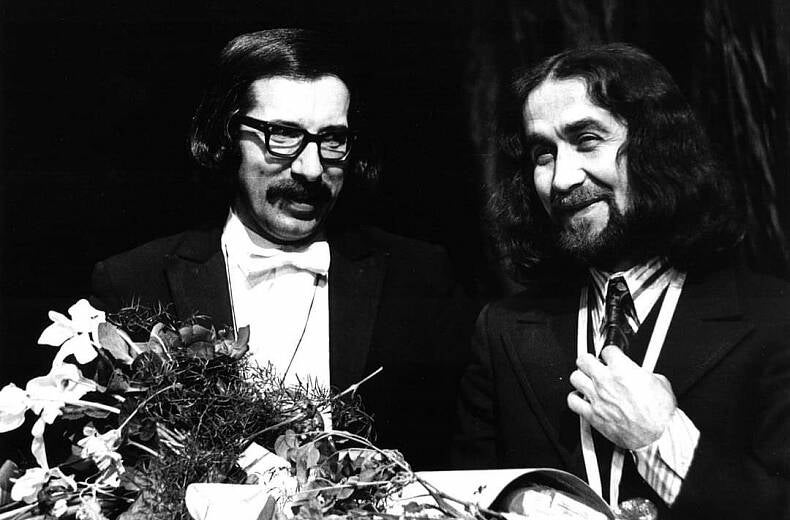
Imants Kalniņš with Imants Ziedoņis. Source: lsm.lv (Latvijas Sabiedriskais Medijs)
Link to the 1981 recording (Latvia) featuring Kārlis Zariņš as Tots. (You may need to skip the advertisements.) A guide to this historical audio recording in Latvian can be found in the summary.
Synopsis of the Opera
The times in parentheses refer to the start of each scene described in the audio recording of the entire opera available on YouTube. I would like to try to give this documentary recording in the Latvian language a bit more structure and make it more accessible.
Act I
(09:08) The opera begins. Lelde and Zemgus’s wedding celebration is about to start. (15:00) Three uninvited guests - fairy-tale characters - appear: a witch, a blind man, a lame man, and the singer Tots with his instrument, a kokle. The fairy-tale characters utter grim prophecies. Tots, on the other hand, entertains the guests and Lelde with a song - “Spēlēju, dancoju.” (23:45) Lelde is moved; the song awakens in her a sense of freedom and joy of life. The dancing at her wedding is to continue. Unnoticed, the old lord’s demon appears at the wedding celebration and steals three drops of Lelde’s blood. (28:35) All the strings on Tots’ kokle snap, and Lelde dies.
(31:40) Zemgus and Tots mourn Lelde and get into an argument. Tots pleads with Mother Earth to bring the girl back to life. (36:42) The mole cricket appears as a messenger of Mother Earth. She gives Tots roots to replace his broken strings and speaks of the power of song to fight evil. Tots is told to descend into the earth and search for Lelde.
(40:18) Tots encounters the spirits of the dead. They implore him to fight for them and for Lelde, for their peace and their legacy in life are being disrupted by the suffering the demons are inflicting upon them. To do this, he must steal the Candle of Death from the three-headed demon and use it, along with the three stolen drops of blood, to bring Lelde back to life. Tots sets off for the underworld (47:33, end of Act 1).
Act II
(49:40) In the underworld, Tots, pretending to be dead, searches for the old Lord. He finds him, and the Lord is still intoxicated by Lelde’s blood. The Lord confirms to Tots that he can bring Lelde back to life with the drops of blood. (53:20) Other demons doubt that Tots is truly dead. Disturbed by the commotion, their ruler, the three-headed demon, also appears (55:45). Tots is urged to play and sing. He captivates and outwits the demons with his performance, so that they give him a devil’s tail, which he uses as a string for his kokle (59:20). His instrument gains ever more sound and power.
(1:01:40) He finally finds Lelde. She is very weak, but not yet completely under the demons’ control. She gives Tots a strand of her hair to use as another string for his kokle. (1:07:55) Tots wants to outwit the old Lord in order to get the drops of blood. He uses his singing to make the old Lord believe he is marrying Lelde. Spurred on by the song, the demons tear the drops of blood from the old Lord’s body. But they fall to the ground and seep away - into the earth, from which Tots had been promised help.
(1:10:00) Even the three-headed demon is moved and offers Tots the chance to remain in the underworld as its new ruler. He himself longs for peace, and Tots reminds him of his son, who, however, left the underworld for the joys of the world and of life. Tots, however, prefers to unite both worlds (1:16:20). The demons try to prevent Tots from leaving the underworld. (1:21:55) Tots calls upon the dead for help, and they bring him the Candle of Death. With it, he can drive the demons away. (1:25:05) Tots can now strengthen Lelde and leave the underworld with her. But the candle was also given to him to carry the memory of the dead into the present and into the future (1:28:25, end of Act 2).
Act III
(1:30:25) On Earth, people anxiously await Tots’ return. The witch, the lame man, and the blind man recount the grim events of the night and offer little hope. (1:33:35) Tots brings the apathetic Lelde with him and refuses to be intimidated by either the fairy-tale characters or the dismissive Zemgus. He lights the Candle of Death, whose light merges with that of the rising sun and brings peace to the dead. (1:41:25) But this is not enough to keep Lelde alive. She still needs the three drops of blood. These are lost, and someone must sacrifice themselves for them. Zemgus is not willing to do so. (1:47:35) Tots realizes that only he himself can give Lelde his blood. (1:51:05) He kills himself, thereby finally bringing Lelde back to life. She takes over Tots’ song as he dies. The mole cricket glorifies Tots as a saint and proclaims that he and his song will live on in every human being (1:59:20, end of Act 3).
From LMIC: The music of Imants Kalniņš is absolutely individual. In both classical and non-academic genres the composer’s signature style is equally recognizable – as brilliant in symphonic as in pop music. Ostinati figures and detailed ornaments of the melodies or principal themes abound, there is no lack of characteristic harmonic progressions and cadences. While works from the early period show an expressionistic character, his later works are characterized by crystal clear texture and classical thinking. He feels quite comfortable in extended works, large forms: I enjoy a longer conversation with the listener. The music of Imants Kalniņš has developed into a powerful influence on his colleagues, often there is cause for speaking about epigones of Kalniņš. However, it is not in the sense of plagiaristic epigonism, but rather the mark of a powerful musical personality on his peers and their music.
Orests Silabriedis
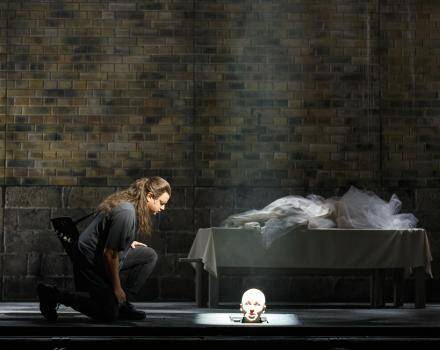
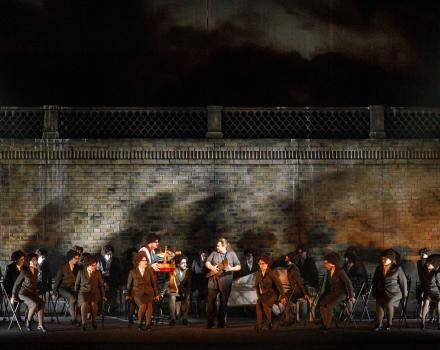
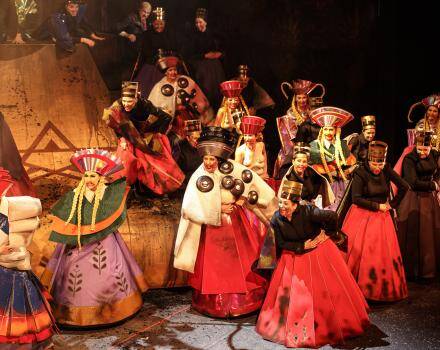
Unfortunately, Operavision’s excellent video stream is currently unavailable, with the exception of two scenes:
Additional scenes are available on Marlēna Keine’s YouTube channel.
From the production in Riga / Streamed by Operavision (2020). © In part by the singers; photos by Agnese Zeltina
© © Raimonds Bramanis & Marlēna Keine - photos: Agnese Zeltina
© © Rihards Mačanovskis & Jānis Apeinis - photos: Agnese Zeltina
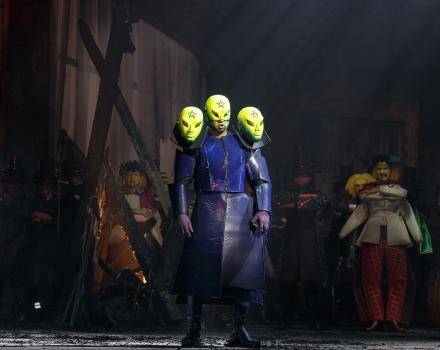
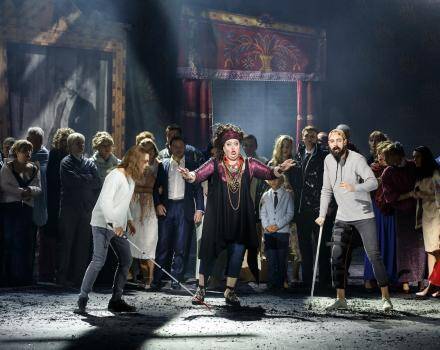
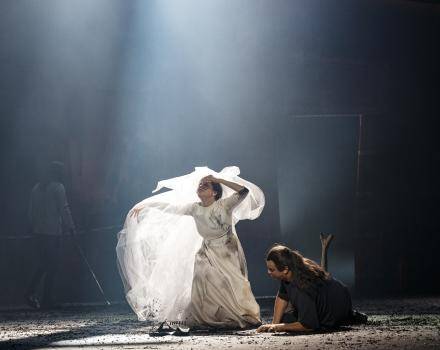
A scene from the Operavision stream that is still available online - Act 1, introduction of the title motif “Spēlēju, dancoju …”:
https://youtu.be/27kLd3U94tc?si=Q1XCz19oSLwyzlrK
A scene from the Operavision stream - Chorus of the Dead - that is still available online:
https://youtu.be/a69MSrHeYbE?si=5zWov7vIEKoWRQ5u
From Marlēna Keine's YouTube channel. Wedding scene from Act 1 and the opera's finale (You may need to skip any ads):
Operavision is undoubtedly the most important streaming platform for curious opera enthusiasts. Here, the most interesting productions from selected European opera houses are offered for a limited time (for free and WITHOUT ads!) in the highest technical and artistic quality. It also features background information on the productions and works… and interesting podcasts. A paradise for opera enthusiasts! https://operavision.eu/de